There is a quiet crisis playing out in many South African schools — and it has nothing to do with a lack of dedicated staff. Principals are working long hours. Teachers are putting in genuine effort. Deputy principals and HODs are stretched thin trying to hold everything together. Yet despite all that hard work, the school still feels like it is running on chaos.
The real culprit? Weak systems.
When systems are absent or poorly designed, every day becomes an exercise in reactive management. Fires get put out, but nothing really changes. An absent teacher creates a timetabling crisis. A miscommunication spirals into a parent complaint. A missed deadline turns into a compliance issue. Principals find themselves managing the same problems over and over — not because they are bad leaders, but because there is no system in place to prevent those problems from recurring.
Reactive management is exhausting. It consumes energy that should be directed at improving teaching and learning, developing staff, and building school culture. The principals who manage to rise above the daily grind are not necessarily working harder — they are working smarter, through systems.
Strong systems create consistency. They reduce the mental load on leadership. They make accountability visible and fair. They protect time for what matters most: the quality of education that learners receive.
Common operational challenges that weaken schools include administrative overload, poor staff accountability, inconsistent communication with parents and staff, fragmented planning processes, unmanaged workloads, curriculum pressure without structure, and compliance demands that arrive without supporting systems to meet them.
None of these challenges are solved by motivation alone.
High-performing schools are rarely built on motivation alone — they are built on strong systems.
1. Strategic School Planning Systems
Why It Matters
Without a clear strategic direction, a school drifts. Each term becomes a reaction to whatever appears most urgent, rather than a deliberate step toward a larger goal. Strategic planning systems give a school its compass.
Common Problems Schools Face
Many schools have a School Improvement Plan (SIP) that lives in a filing cabinet and is rarely consulted. Goal-setting happens in January, and by March, those goals have been buried under the demands of the school day. There is no regular tracking, no accountability, and no connection between the strategic plan and the daily decisions being made.
Practical Strategies
- Develop a School Improvement Plan with clear, measurable goals for the year
- Break annual goals into term-by-term priorities and assign responsibility to specific leaders
- Schedule a formal mid-year review of progress against strategic targets
- Display school priorities visibly to keep staff aligned
Simple System Schools Can Use
A one-page term planning tracker that maps each strategic priority to a responsible person, key actions, and a completion date — reviewed monthly at SMT level.
EduPulse Africa’s School Improvement Planning Toolkit provides ready-to-use templates and frameworks to help SMTs develop, track, and communicate strategic priorities across the school year.
2. Staff Accountability and Performance Systems
Why It Matters
A school can only improve when its staff are supported, developed, and held accountable in a structured way. Without formal performance systems, underperformance goes unaddressed and high performers go unrecognised.
Common Problems Schools Face
Classroom observations happen irregularly, if at all. Feedback is given informally or not at all. Staff development is reactive rather than planned. When performance issues arise, principals often lack the documentation to act on them appropriately.
Practical Strategies
- Conduct formal and informal classroom observations on a regular, scheduled basis
- Use structured observation forms that align with CAPS and school priorities
- Build in professional development conversations linked to appraisal outcomes
- Create a culture where feedback is developmental, not punitive
Simple System Schools Can Use
A structured classroom observation schedule for HODs, with a standard feedback template and a linked professional development conversation form — completed termly.
EduPulse Africa’s Staff Performance and Appraisal Tools give SMTs and HODs the frameworks they need to make performance management consistent, fair, and development-focused.
3. Teacher Planning and Productivity Systems
Why It Matters
Inconsistent lesson planning affects the quality of classroom delivery. When teachers are not adequately supported to plan effectively, curriculum coverage suffers, and assessment is not aligned to learning.
Common Problems Schools Face
Teachers submit lesson plans as a compliance exercise rather than a genuine planning tool. There is no standardised format across departments. Some teachers are overwhelmed by administrative demands that cut into planning time.
Practical Strategies
- Establish a school-wide lesson planning format that is practical, not bureaucratic
- Build planning time into the school schedule deliberately
- Use HOD review processes to support rather than police teacher planning
- Track assessment coverage against the ATP to identify gaps early
Simple System Schools Can Use
A departmental planning calendar that maps curriculum coverage, assessment dates, and moderation deadlines across the term — with HOD sign-off at the start of each term.
The Teacher Productivity and Planning Toolkit from EduPulse Africa offers customisable templates for lesson planning, assessment tracking, and workload management.
4. Timetabling and Scheduling Systems
Why It Matters
The school timetable is the engine that drives everything. A poorly constructed timetable creates conflict, wastes contact time, and places unfair workloads on some staff while others are under-utilised.
Common Problems Schools Face
Timetables are often reactive — built quickly and not revisited when staffing changes occur. Duty rosters are inconsistently applied. Assessment schedules clash across grades, creating unnecessary pressure for learners and markers.
Practical Strategies
- Build the master timetable with workload equity as a key principle
- Develop duty rosters that are published, rotated, and enforced
- Coordinate the assessment schedule across grades at the start of the year
- Review the timetable mid-year to address problems before they escalate
Simple System Schools Can Use
A master timetable template combined with an annual assessment schedule — shared with all staff at the start of each year and updated termly.
EduPulse Africa’s Timetabling and Scheduling Tools support SMTs to build fair, functional timetables and manage scheduling conflicts proactively.
5. School Administration Systems
Why It Matters
The front office is the first point of contact for parents, officials, and visitors. Disorganised administrative systems damage the school’s reputation and create unnecessary stress for staff.
Common Problems Schools Face
Parent communication is inconsistent and reactive. Meeting schedules are not communicated in advance. Records are difficult to find. The front office operates without clear protocols.
Practical Strategies
- Develop a communication protocol for parents — what will be communicated, by whom, and through which channel
- Build an annual meeting calendar that is shared with staff at the start of the year
- Create a records management system for learner files, staff documents, and compliance records
- Establish clear front-office protocols for visitors, queries, and complaints
Simple System Schools Can Use
A parent communication planner and a meeting schedule template — published at the beginning of each term.
The School Administration Toolkit from EduPulse Africa equips schools with the templates and processes to run a professional, efficient front office.
6. Financial Management Systems
Why It Matters
Financial mismanagement — even unintentional — can have serious consequences for a school. Principals are accountable for school funds, and without proper systems, even well-meaning decisions can create audit problems.
Common Problems Schools Face
Budget tracking is inconsistent. There are no clear procurement controls. Fee collection and reconciliation are poorly managed. Schools are not audit-ready when external reviews occur.
Practical Strategies
- Develop an annual school budget with input from all departments
- Implement clear procurement controls, including approval thresholds
- Track fee payments and reconcile monthly
- Maintain a financial record file that is audit-ready at all times
Simple System Schools Can Use
A budget tracking spreadsheet with monthly reconciliation, linked to departmental budget requests and procurement approval records.
EduPulse Africa’s School Financial Management Toolkit provides accessible tools for budget planning, tracking, and compliance readiness.
7. Risk Management and School Safety Systems
Why It Matters
Schools are responsible for the safety of hundreds of learners every day. Without documented safety systems, a school is not only legally exposed — it is also genuinely dangerous.
Common Problems Schools Face
Emergency procedures exist on paper but have never been practised. Risk assessments are not conducted regularly. Visitor management is informal. Incidents are not properly documented or reported.
Practical Strategies
- Conduct an annual school safety audit and document findings
- Practise emergency evacuation procedures at least once per term
- Implement a visitor register and protocol at the school gate
- Create an incident reporting system that is consistent and accessible
Simple System Schools Can Use
A school safety checklist, visitor register, and incident reporting template — reviewed by management each term.
The Risk Management and School Safety Toolkit from EduPulse Africa helps schools build a culture of safety with practical, ready-to-use tools.
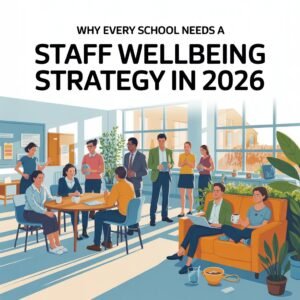
8. Staff Wellbeing Support Systems
Why It Matters
Burnout among school staff is a genuine crisis in South African education. When staff wellbeing is not actively supported, turnover increases, morale drops, and learner outcomes suffer.
Common Problems Schools Face
Wellbeing is treated as a nice-to-have rather than a leadership priority. There are no formal check-in processes. Recognition is inconsistent. Staff members in distress have nowhere to turn.
Practical Strategies
- Build regular wellbeing check-ins into the SMT calendar
- Implement a structured staff recognition programme
- Create channels for staff to raise concerns safely and constructively
- Prioritise workload balance as a management decision, not just a personal responsibility
Simple System Schools Can Use
A termly wellbeing survey and a structured recognition calendar — both managed at SMT level and reviewed before each staff meeting.
EduPulse Africa’s Staff Wellbeing Toolkit supports school leaders to build environments where teachers feel valued, supported, and sustainable in their roles.
9. Learner Support and Wellbeing Systems
Why It Matters
Learner wellbeing has a direct impact on academic performance. Schools that support the social and emotional needs of learners create conditions in which learning can happen.
Common Problems Schools Face
Learner referrals to support services are delayed or inconsistent. Social-emotional learning is not built into the school programme. Parent communication about learner welfare is reactive rather than proactive.
Practical Strategies
- Develop a clear referral pathway for learners who need additional support
- Build social-emotional learning into the school’s daily routines and culture
- Create a system for early identification of at-risk learners in collaboration with HODs and class teachers
- Establish regular communication with parents of learners who need additional support
Simple System Schools Can Use
A learner referral tracker and an early warning identification checklist — reviewed fortnightly by the relevant HOD or counsellor.
The Learner Wellbeing Toolkit from EduPulse Africa helps schools create structured, compassionate support systems that keep learners engaged and supported.
10. School Culture and Communication Systems
Why It Matters
School culture is not an accident. It is the result of deliberate, consistent leadership choices. Strong culture reduces conflict, builds pride, and creates a shared sense of purpose among staff and learners.
Common Problems Schools Face
School values are written on the wall but not lived in practice. Communication from leadership is inconsistent or unclear. Staff expectations are assumed rather than communicated. There is no shared language around what the school stands for.
Practical Strategies
- Define and communicate the school’s core values explicitly and regularly
- Develop a communication protocol that sets expectations for how and when information is shared
- Model the school’s values visibly at leadership level
- Use assemblies, staff meetings, and newsletters to reinforce cultural norms and celebrate aligned behaviour
Simple System Schools Can Use
A values charter and a communication calendar — used consistently by all members of the SMT to create a unified voice for the school.
EduPulse Africa’s School Culture and Values Packs provide schools with tools to articulate, embed, and sustain a positive, purpose-driven school culture.
Conclusion: Systems Are What Sustainable Schools Are Built On
Every school has hard-working people. Most have dedicated teachers who care about their learners. Many have principals and deputy principals who are giving everything they have to their schools.
But hard work alone cannot compensate for the absence of systems.
Good schools cannot rely on exceptional individuals to hold everything together indefinitely. People leave, burn out, or have bad days. What remains — what sustains a school through leadership transitions, staff changes, and external pressures — is the quality of its systems.
Strong systems reduce chaos. They make expectations clear. They create accountability without micromanagement. They protect time for teaching and learning by eliminating unnecessary firefighting. They allow good leaders to lead strategically rather than spending every day managing crises.
The goal is not to create bureaucracy for its own sake. The goal is to build a school that functions well regardless of who is having a difficult week.
Start with one system. Choose the area where your school is most exposed — whether that is staff accountability, planning, safety, or communication. Build a simple, workable system. Implement it consistently. Then move to the next.
Over time, those systems compound. They become the infrastructure that allows your school to grow, improve, and sustain its progress.
Looking to Strengthen Your School Systems?
EduPulse Africa develops practical, ready-to-use school leadership toolkits, templates, trackers, and professional development resources designed specifically for South African schools.
Whether you are building your first formal systems or strengthening what is already in place, EduPulse Africa gives you the tools to lead with confidence and consistency.
Visit www.edupulseafrica.com to explore the full range of resources.
EduPulse Africa | Practical systems for high-performing schools